
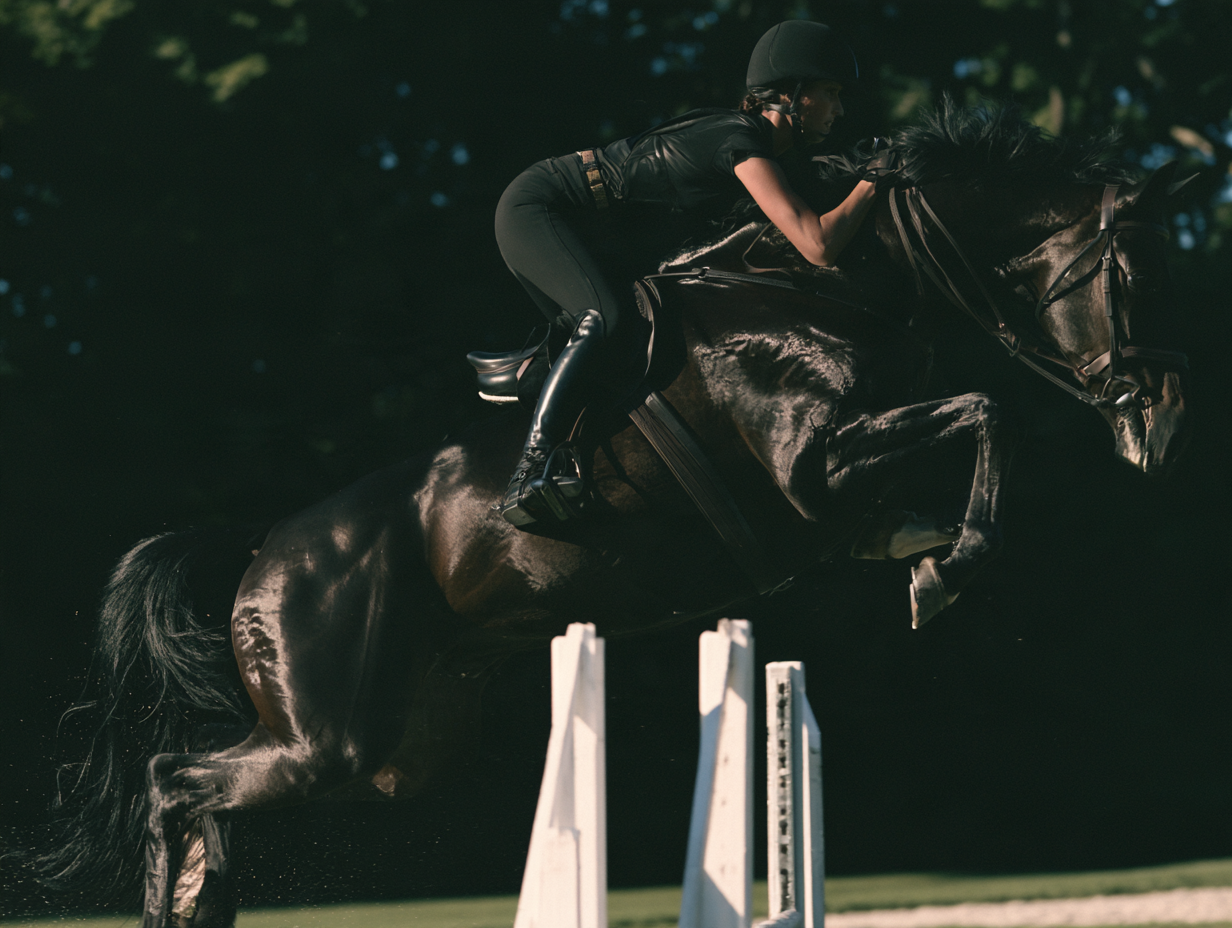
There is a strange contradiction in the way the equestrian industry talks about adult amateurs. They make up a huge portion of the people actually buying products, entering shows, taking lessons, leasing and owning horses, and spending money on the sport, yet they are often marketed to as though they are somehow less serious than the riders around them.
Part of this comes from the way equestrian sport has historically been divided into categories. Juniors are celebrated for their dedication and potential, professionals are respected for their expertise and results, and adult amateurs tend to get placed somewhere in between. The assumption seems to be that once a rider has a full-time job, a family, a mortgage, a business, or other responsibilities outside the barn, riding naturally becomes more of a part-time, poorly done hobby.
That assumption deserves to be challenged.
Growing Up Does Not Mean Taking the Sport Less Seriously
For many adult amateurs, becoming an amateur was never really a decision to become less committed to riding. They simply aged out.
The rider who spent every afternoon at the barn as a teenager may now be running a business. The junior who once had an entire summer structured around horse shows may now have a demanding career and a family at home. The rider who used to spend every weekend at the barn may now be balancing work, travel, relationships, a mortgage, and the logistics of keeping a horse.
Their lives changed. Their standards for themselves often did not.
In many cases, the adult amateur is still riding multiple times a week, taking lessons, working with trainers, competing, traveling to shows, and investing heavily in their horses. They are thinking about fitness, training, equipment, nutrition, performance, and long-term soundness. They may have fewer hours available than they did at 17, but that does not make the hours they do have any less important.
If anything, there is something particularly impressive about someone who has built an entire adult life and still makes room for the sport they love.
Stop Treating Amateurs Like They Need to Be Coddled
This is where equestrian marketing often misses the mark.
There is a tendency to associate the adult amateur with convenience, comfort, and simplification. Brands talk about making life easier, making riding more comfortable, fitting riding into a busy schedule, or helping the rider “keep up” with everything they have going on.
Those things can absolutely be relevant. Adult amateurs do have busy lives, and products that solve real problems are valuable. But there is a difference between understanding someone’s lifestyle and defining them by their limitations.
An adult amateur does not necessarily need to be reminded that they are busy. They already know.
What they want is often the same thing every serious rider wants: equipment that performs, clothing that works, products that hold up, and brands that understand why they care so much about what they do.
There is also a certain irony in the way the industry sometimes talks to adult amateurs. We expect them to make significant financial investments in horses, training, boarding, competition, and equipment, then turn around and market to them as though they need to be handled with kid gloves. That does not make much sense.
The Amateur Rider Is Still an Athlete
Being an amateur describes how someone participates in the sport. It does not describe how seriously they take it.
An adult amateur can be incredibly competitive. They can spend years improving their horse, working toward specific goals, and showing at the top levels of the sport high. They can have a trainer, a program, a fitness routine, and a carefully considered approach to their riding.
They may simply have another career outside the arena.
This distinction matters because many brands have a tendency to blur the two. When brands position professional riders as athletes and adult amateurs as lifestyle consumers, they create an artificial divide that does not necessarily exist in the actual sport.
The amateur rider is still putting in the work. They are still asking their horse for more. They are still studying their sport and investing in getting better. The fact that they may have to schedule a lesson around a board meeting does not make them any less of an athlete.
In fact, that is often exactly what makes the adult amateur such an interesting customer.
Adult Amateurs Are an Extremely Valuable Customer
From a marketing perspective, the adult amateur should be one of the most compelling audiences in equestrian sport.
These are experienced consumers who often know exactly what they want. They have years of exposure to different brands and products, and they have enough experience to understand the difference between something that simply looks good and something that actually performs.
They are also making purchasing decisions with their own money.
That creates an opportunity for equestrian brands, but only if they stop thinking of the amateur as the person who needs the least and start recognizing them as the person who knows exactly what they are looking for.
The opportunity becomes even bigger when brands understand that adult amateurs are not one-dimensional. They can be competitive riders and business owners. They can be mothers, executives, entrepreneurs, doctors, lawyers, designers, or teachers. They can spend their mornings in a boardroom and their evenings at the barn.
That is not a marketing problem to solve. It is a story worth telling.
Market to the Person, Not the Limitation
There is a much more compelling way to market to adult amateurs.
Show the rider who has a full life outside the barn, but does not treat that life as an explanation for why they ride less seriously. Show someone who gets off a flight and heads straight to the barn. Show the business owner who spends the morning running a company and the afternoon preparing for a horse show. Show the parent who manages an entire household and still makes time for lessons.
There is so much more depth in those stories than simply telling someone that a product is “perfect for your busy lifestyle.”
Adult amateurs do not need to be positioned as people who are squeezing a little bit of riding into an otherwise important life. For many of them, horses are an important part of that life. To some, it is the central part of their life still. Their careers, families, businesses, and responsibilities exist alongside their identity as riders.
That is a much more powerful story.
Equestrian Marketing Needs to Catch Up
The industry has spent years celebrating the junior rider with potential and the professional rider with accomplishments. There is certainly a place for both. But the adult amateur deserves the same level of respect in the way brands talk to them.
They are not a lesser version of the professional rider. They are not a junior who simply got older. They are a distinct and incredibly valuable part of the equestrian market, with their own experiences, priorities, purchasing power, and ambitions.
Most importantly, they are still athletes.
The equestrian industry does not need to make adult amateurs feel like they are doing an impressive job simply by finding time to ride. It needs to recognize that many of these riders are pursuing the sport seriously while simultaneously building full, complicated adult lives.
That deserves more than a marketing strategy built around convenience. It deserves respect.